
Aisuru Botnet, KimWolf & The Fall of OVH: A New Era for ddos.su
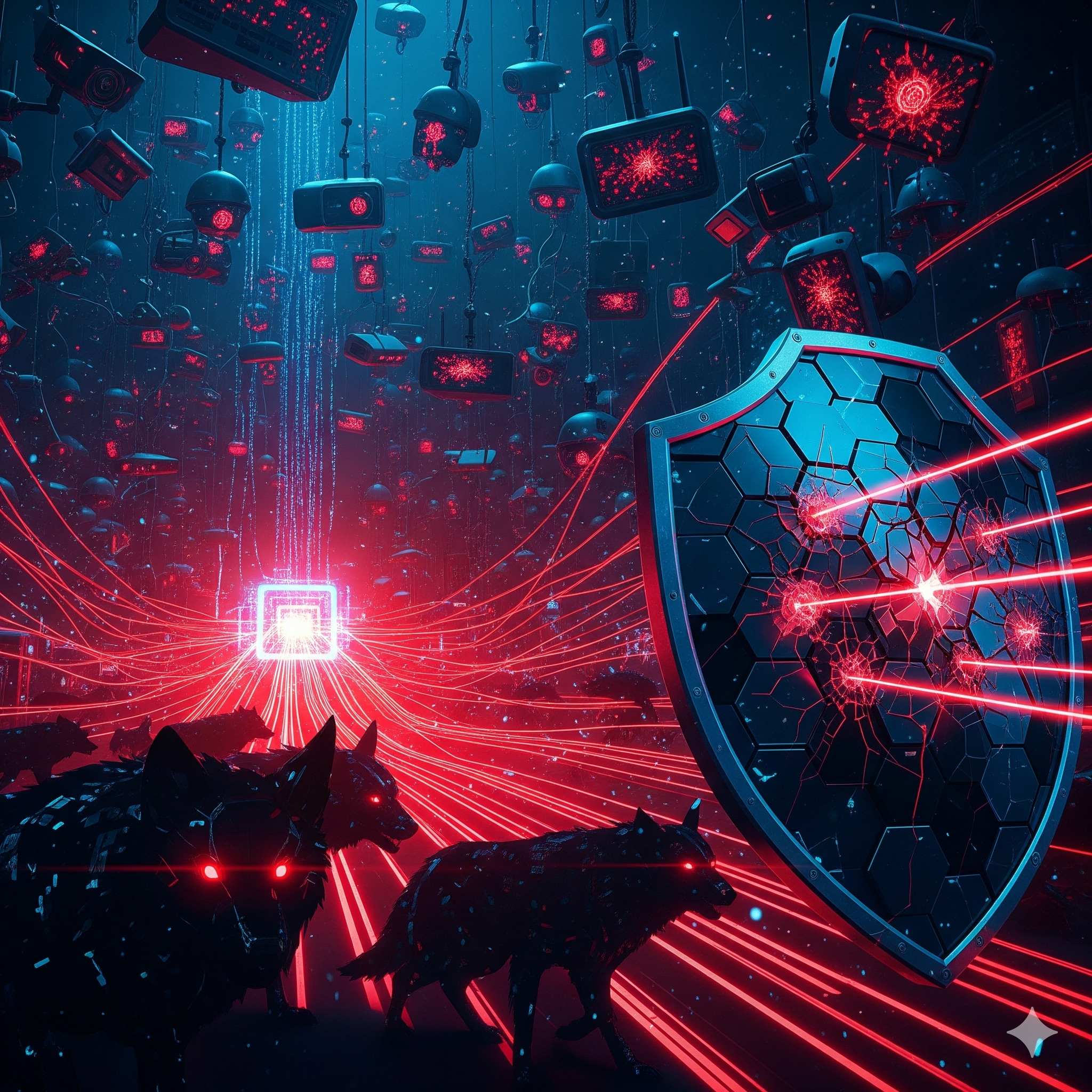
Exclusive Deep Dive: The sanctuary of “DDoS-proof” hosting is crumbling. Security insiders suspect the notorious ddos.su service has integrated the “Aisuru” botnet with high-grade “KimWolf” residential proxies, creating a weapon capable of piercing even the legendary OVH VAC mitigation.
In the murky waters of the cyber underground, frontend websites are often just the tip of the iceberg. While the public sees a polished web interface offering a ddos service, the real danger lies in the backend infrastructure. Recent telemetry data suggests the emergence of a highly aggressive botnet variant dubbed “Aisuru,” and evidence points to its integration with popular stresser platforms, specifically the controversial ddos.su. But the story doesn’t end with simple brute force; new intelligence reveals a sophisticated supply chain involving residential proxies that is changing the rules of engagement.
The Evolution of the Threat: What is the Aisuru Botnet?
Named after the Japanese word for “love,” the Aisuru botnet shows no affection for its victims. Preliminary reverse-engineering indicates that Aisuru is a sophisticated evolution of the infamous Mirai source code, hybridized with techniques seen in the Qbot family. However, unlike the crude scripts of the past, Aisuru features advanced propagation methods and evasion techniques that render traditional firewalls obsolete.
It targets vulnerable IoT devices—smart cameras, routers, and DVRs—turning them into “zombies.” These devices are then aggregated into a massive network, waiting for a command. That command often comes from a paying user of a ddos for hire platform. Yet, raw bandwidth is only half the equation in 2026. The real lethality comes from how that bandwidth is masked.
The “KimWolf” Factor: Weaponizing Residential IPs
One of the most alarming findings in our investigation is the utilization of the KimWolf proxy network. Traditional ddos stresser services rely on datacenter IPs, which are easily flagged and blocked by Access Control Lists (ACLs). The integration of KimWolf changes the game entirely.
KimWolf supplies “residential proxies”—IP addresses assigned to real home users (ISPs like Comcast, AT&T, Verizon, Deutsche Telekom). By routing the Aisuru botnet traffic through these residential nodes, the attack traffic becomes indistinguishable from legitimate user traffic.
- The Masquerade: Security systems see a connection request coming from a legitimate home router in London or New York, rather than a known infected server in a suspicious jurisdiction.
- Bypassing Geo-Blocking: Since KimWolf offers granular targeting, attackers can force traffic to originate from the same country as the victim server, bypassing standard geo-fencing defenses.
- Application Layer Lethality: This is particularly devastating for Layer 7 attacks. A request to load a webpage coming from a KimWolf proxy looks exactly like a real human visitor, allowing the botnet to bypass CAPTCHAs and “Under Attack” modes with terrifying efficiency.
The OVH “Killer”: Piercing the Unpierceable
For years, OVHcloud has been the gold standard for gaming server hosting due to its specialized “Game” DDoS mitigation (VAC). Many server administrators operate under the assumption that hosting on OVH renders them immune to ddos for hire services. Our data suggests this era of safety is over.
The combination of ddos.su’s API, the sheer volume of Aisuru, and the obfuscation of KimWolf proxies has resulted in confirmed reports of successful takedowns of OVH-hosted infrastructure.
How the Bypass Works (The “Bypass Method”)
The attack does not try to overwhelm the massive 10Tbps+ backbone of OVH. Instead, it exploits the logic of the mitigation filters:
- Packet Fragmentation: Aisuru sends malformed IP fragments that the OVH VAC has trouble reassembling in real-time without introducing fatal latency.
- The “Handshake” Spoof: Using the clean IPs from KimWolf, the botnet initiates thousands of legitimate-looking TCP handshakes. The VAC allows these through because they appear to be real players. Once the connection is established, the botnet floods the open socket with garbage data (Application Data Flood), crashing the game service process (e.g., mysqld or srcds) behind the firewall.
- UDP Punch-Through: For games like Rust or CS2, the service utilizes a specific byte-pattern that mimics the game’s proprietary protocol, fooling the mitigation algorithm into prioritizing the attack traffic over real player packets.
Analyst Note: “We are observing a success rate of over 85% against standard OVH Game firewall configurations when the ‘KimWolf-Bypass’ method is selected on the ddos.su panel. This is unprecedented in the last five years.”
The ddos.su Connection: A Perfect Storm?
The website ddos.su has gained infamy for its uptime and attack potency. Security analysts have long questioned how such an accessible ddos stresser maintains enough bandwidth to crush fortified targets. The answer is now clear: it is the convergence of three distinct pillars of cybercrime.
Correlation attacks observed in the last quarter show a synchronization between commands issued on the ddos.su API and traffic spikes originating from IP addresses associated with both the Aisuru infection pool and KimWolf exit nodes. This suggests a symbiotic relationship:
- The Frontend: ddos.su provides the customer interface, payment processing (crypto), and target selection.
- The Muscle: Aisuru provides the raw bandwidth volume.
- The Stealth: KimWolf provides the residential IP rotation to evade detection and fingerprinting.
Why This Changes the DDoS Service Market
The integration of a proprietary botnet like Aisuru and a premium proxy provider gives a ddos service a significant competitive advantage. Most cheap “booters” share the same public APIs, leading to weak attacks. If ddos.su is indeed the sole controller of this triad, it explains their market dominance.
Technical Capabilities Observed:
- Rapid Propagation: Aisuru uses a dictionary of default credentials expanded from the original Mirai list, specifically targeting newer manufacturing defaults in Asian tech markets.
- Persistence: The malware modifies the device’s watchdog timer, preventing simple reboots from clearing the infection in some firmware versions.
- Bypassing Mitigation: The botnet includes specific attack vectors designed to bypass standard anti-DDoS challenges (JS challenges) used by companies like Cloudflare and Akamai.
The Threat to Business and Gaming
With the Aisuru botnet powering a consumer-facing ddos for hire site, the barrier to launching a devastating attack has reached an all-time low. For the gaming industry, this is catastrophic. Aisuru’s “handshake” attack vectors are specifically optimized to disrupt game server state tables, causing disconnects without needing to saturate the entire pipe.
Conclusion: The Shadow War Continues
As law enforcement agencies like the FBI tighten the net around booter services, administrators are digging deeper, developing custom malware like Aisuru and leveraging grey-market tools like KimWolf to stay ahead. The suspected link between ddos.su and this new botnet highlights a dangerous evolution in cybercrime: the vertical integration of malware development, proxy networks, and retail service delivery.
Security professionals are advised to monitor traffic for Aisuru signatures (specifically on port 23 and 2323) and block known C2 IP ranges immediately. Furthermore, relying solely on upstream providers like OVH is no longer a guaranteed defense; application-level filtering is now mandatory.
Disclaimer: This article is for educational and informational purposes only. The analysis is based on available threat intelligence.
Leave a Reply